THE ACE OF SPADES
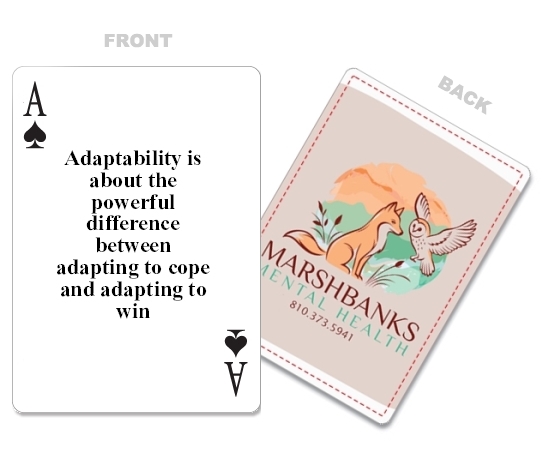
We begin our journey with the all-powerful “Ace of Spades.” Adaptability is a critical component of human development and overall well-being, as it enables individuals to respond effectively to changing life circumstances, challenges, and stressors. Throughout the lifespan, people encounter transitions such as career changes, shifts in family dynamics, health concerns, and unexpected life events. The ability to adjust thoughts, behaviors, and emotions in response to these changes is essential for maintaining psychological health and functioning (Wong et al., 2021).
From a developmental perspective, adaptability is closely tied to resilience, which refers to the capacity to recover and grow from adversity. Individuals who demonstrate adaptability are better equipped to navigate difficult experiences, as they can reframe challenges, seek support, and develop new coping strategies. Research suggests that resilience is not a fixed trait but a dynamic process influenced by personal strengths and environmental supports (Branje et al., 2021). This highlights the importance of fostering adaptability through both internal skills and external relationships.
Bronfenbrenner’s ecological systems theory further emphasizes the role of the environment in shaping adaptability. Individuals are influenced by multiple systems, including family, peers, and broader societal factors, all of which can either support or hinder their ability to adjust to change (Bronfenbrenner, 1979). Supportive relationships within these systems can provide stability and resources, enabling individuals to develop flexible coping mechanisms and a greater sense of control during times of uncertainty.
In counseling and mental health practice, promoting adaptability is a key goal. Counselors often help clients build skills such as emotional regulation, problem-solving, and cognitive flexibility, which are essential for adapting to life’s challenges. By encouraging individuals to embrace change, develop resilience, and utilize available supports, counselors can help foster long-term well-being and personal growth (Wong et al., 2021).
Weekly Challenge: This week, identify one situation in your life where you feel stuck or resistant to change. Take one small, intentional step toward adapting—whether it’s shifting your perspective, trying a new approach, or seeking support from someone you trust. Reflect on how this change impacts your thoughts and emotions, and consider how practicing adaptability can strengthen your resilience over time.
 Marshbanks Mental Health, PLLC 810-991-1307
Leave a comment